
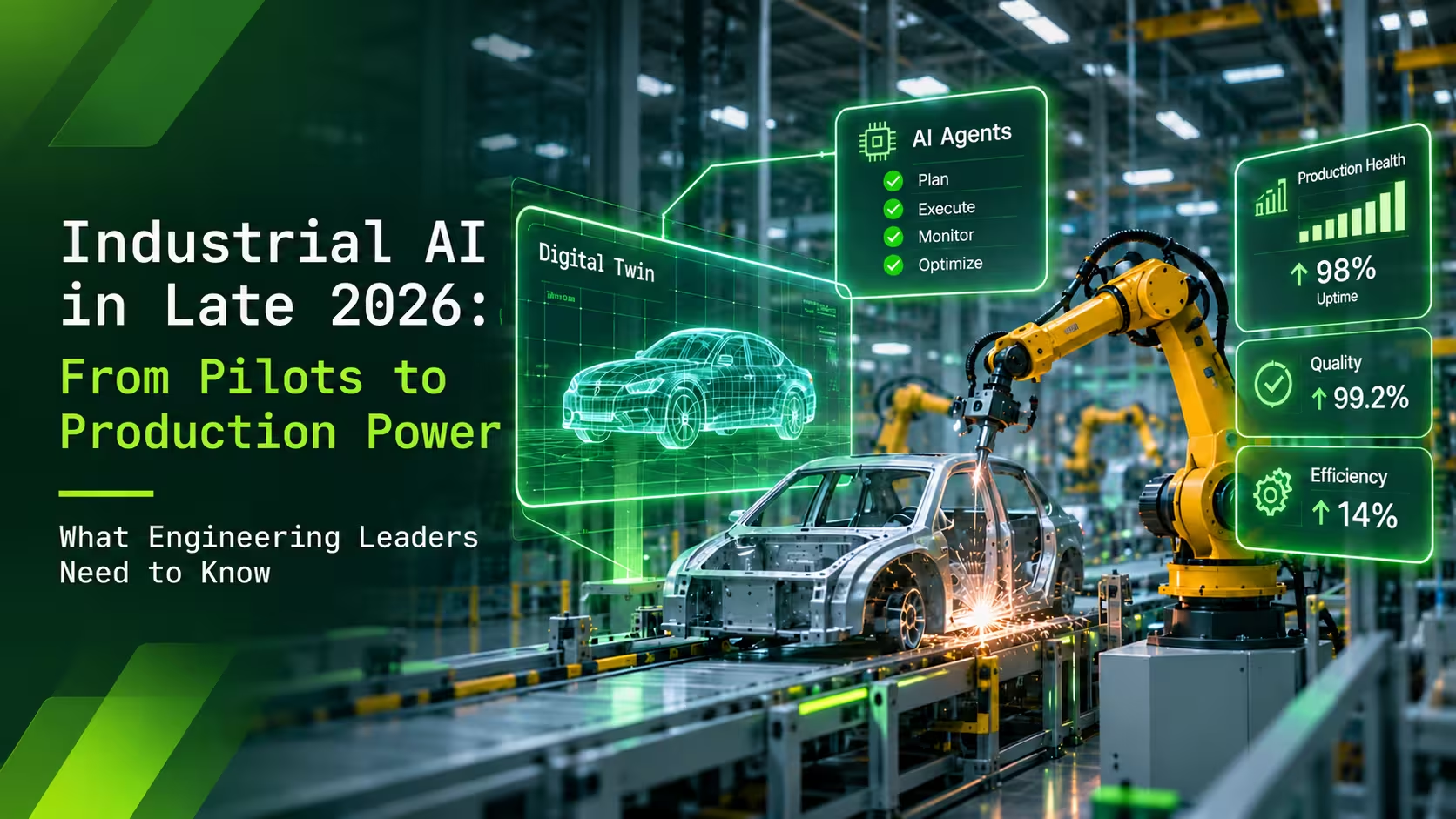
Industrial AI in Late 2026: From Pilots to Production Power — What Engineering Leaders Need to Know
Industrial AI has crossed an important threshold. What was once dominated by demos and isolated pilots is now shifting toward tightly controlled, real-world deployments on the factory floor. For engineering-led organizations, this transition is creating both urgency and opportunity—especially when it comes to leadership and specialized talent.
As of November 2026, the conversation has moved from “Should we explore AI?” to “How do we scale it reliably, securely, and with the right people in place?”
The Shift Underway
Recent industry reports and events, including insights from NVIDIA GTC Berlin 2026, show industrial AI moving beyond experimentation. AI agents are beginning to operate inside engineering and production software—planning tasks, running specialized tools, and supporting closed-loop decisions—while human experts retain oversight and approval authority. Full autonomy on critical lines is still some way off, but limited, high-value deployments are already delivering results.
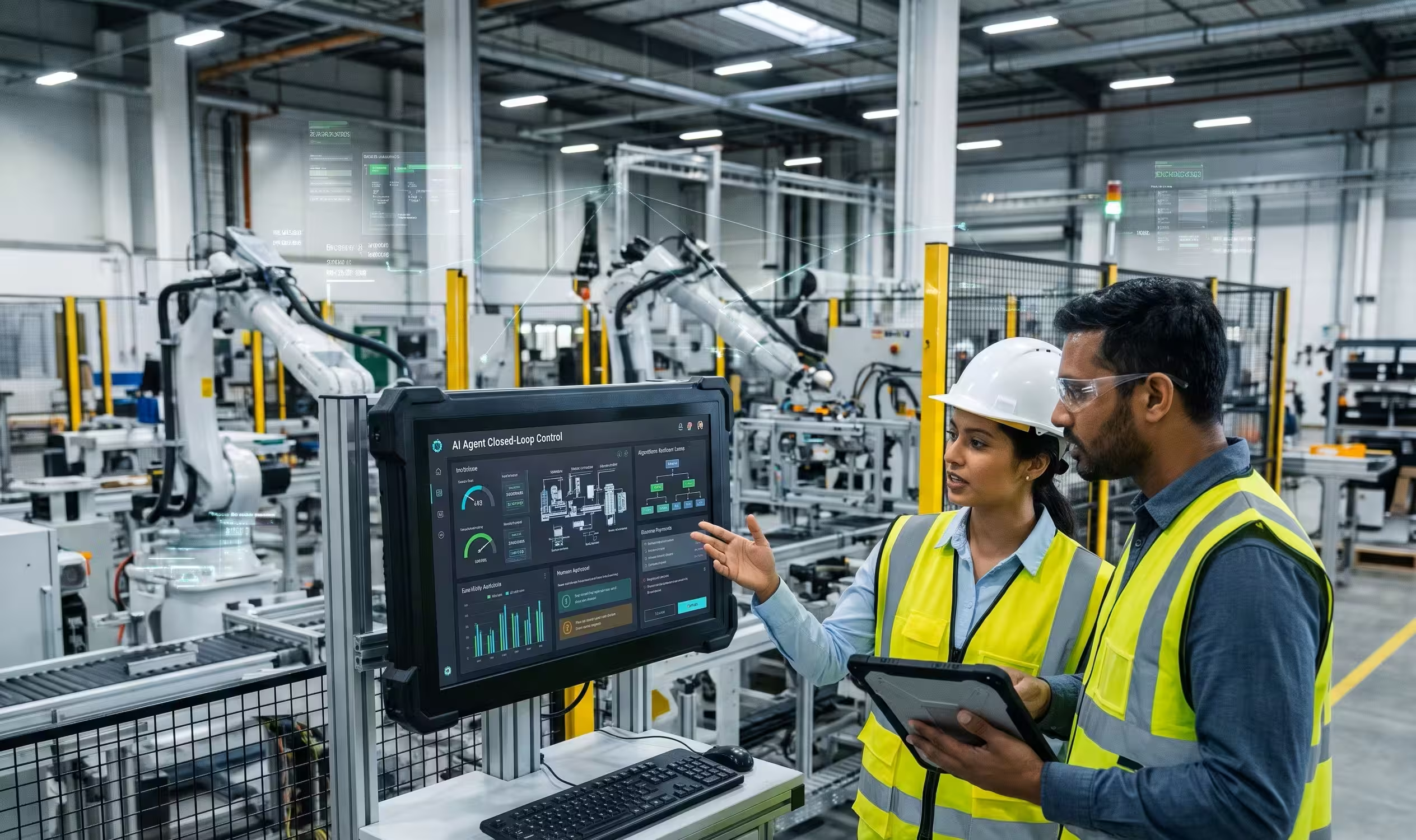
Physical AI is also gaining traction. Adaptive robots, calibrated simulation, and early humanoid pilots are moving from research labs into production environments. At the same time, generative AI is supporting design, documentation, and synthetic data generation, while traditional machine learning continues to power predictive maintenance and quality inspection.
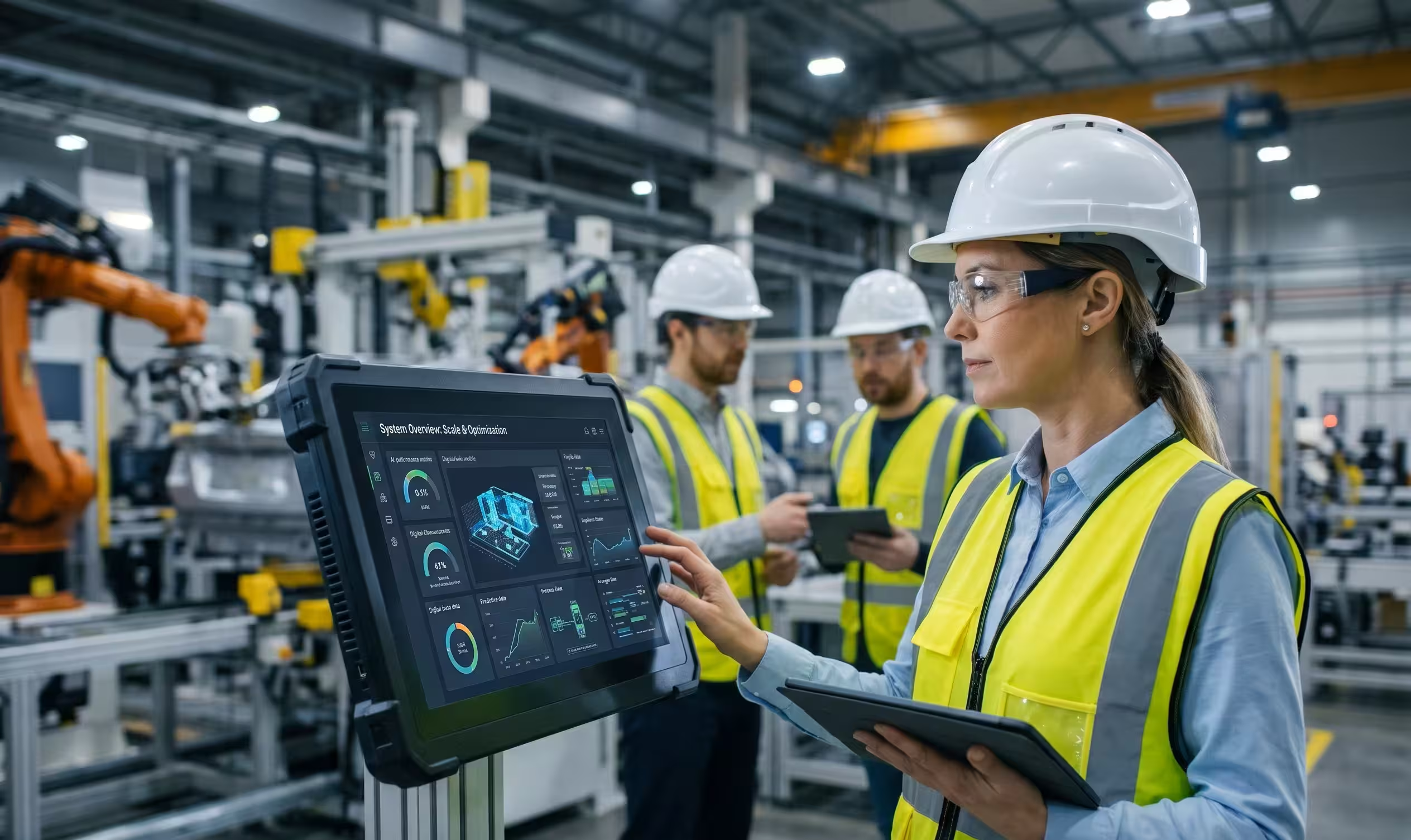
A large majority of manufacturers are already using AI in some form and reporting measurable value. Yet only a small percentage have successfully scaled use cases across sites. The gap between pilots and dependable, production-grade systems remains the central challenge.
What This Means for Engineering Leadership
Scaling industrial AI successfully depends less on the latest algorithm and more on three fundamentals:
- Data foundations and architecture. Contextualized, high-quality industrial data is still scarce in many plants.
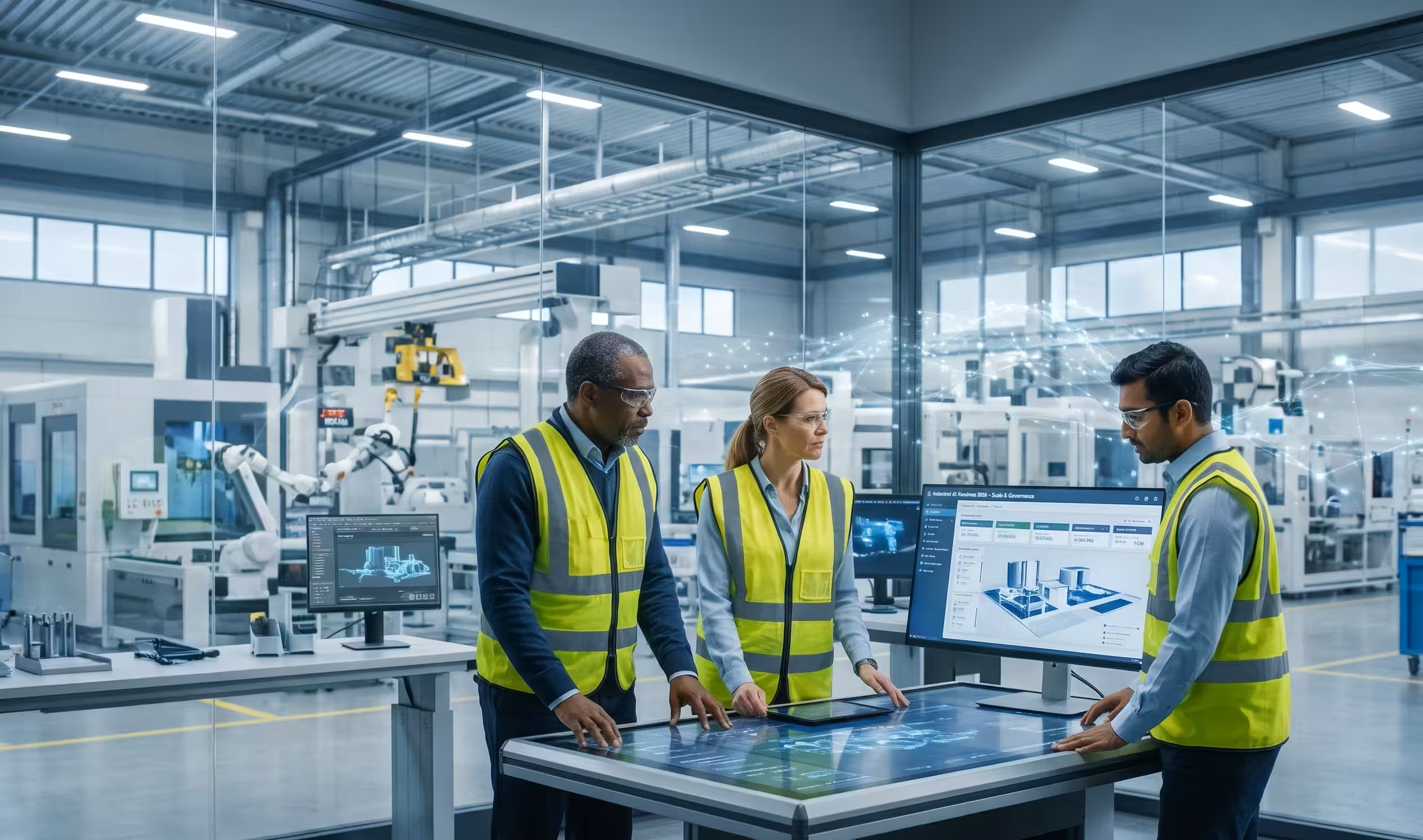
- Security, governance, and trust. As AI systems move closer to operational decisions, cybersecurity, explainability, and clear human-in-the-loop boundaries become non-negotiable.
- Leadership and specialist talent. Organizations need technical leaders who understand both the technology and the operational realities of the factory floor. Roles spanning industrial AI architecture, agentic systems, robotics, digital twins, and smart manufacturing transformation are in high demand—and short supply.
This is where domain-deep expertise matters. Generic technology talent is not enough. Companies need leaders who have shipped systems in regulated, safety-critical, or high-throughput industrial environments.
Where Propellence Fits
At Propellence, we work at the intersection of these trends every day. Through our boutique leadership hiring practice and the Propellence Expert Network (PEN), we help organizations across Automotive ER&D, AI/ML, Semiconductor, Smart Manufacturing, and Industrial Automation identify and engage the engineering leaders and specialist experts required to move industrial AI from pilot to production.
Whether the need is an interim AI/ML or Industrial AI leader, an advisory expert for architecture reviews, or permanent executive search for CTO, VP Engineering, or technical director roles, our focus remains the same: deep domain matching rather than volume recruiting. Explore our industry expertise or start a conversation.
Looking Ahead
The next 12–18 months will favor organizations that treat industrial AI as a core operational capability. Those that invest early in the right technical leadership, data infrastructure, and governance frameworks will pull ahead. Those that continue collecting disconnected pilots risk falling further behind.
Industrial AI is no longer a future topic. It is a present leadership challenge.
If your organization is navigating the move from pilots to scalable industrial AI systems and needs specialized engineering leadership or expert advisory support, start a conversation with us.
Frequently Asked Questions
What is the main challenge for industrial AI in late 2026?
Moving from isolated pilots to dependable, production-grade systems that scale reliably across sites.
What do engineering leaders need to prioritize?
Data foundations and architecture, security and governance with clear human oversight, and specialist technical leadership that understands both AI and factory-floor realities.
Why is generic technology talent often insufficient?
Industrial environments are regulated, safety-critical, or high-throughput. Leaders who have shipped systems in those conditions are required.
How does Propellence support this transition?
Through boutique leadership hiring and the Propellence Expert Network for interim leaders, advisory experts, and permanent executive search in industrial AI and related domains.
Is full autonomy on critical production lines already common?
No. Full autonomy on critical lines is still limited. High-value deployments with human oversight are delivering results today.